
Covering approximately 14,763 sq km, Serengeti National Park ranks among Africa’s most significant protected wildlife areas. The name Serengeti is derived from the Maasai word Siringet, meaning “endless plains,” a reference to the vast grasslands that define much of the landscape. Established in 1951, the park forms part of the larger Serengeti ecosystem, which extends into neighboring Maasai Mara Game Reserve in Kenya and supports one of the highest concentrations of large mammals on the continent.
In 1981, Serengeti National Park was inscribed as a UNESCO World Heritage Site in recognition of its ecological importance and exceptional biodiversity. The park is known for its annual wildebeest migration, substantial predator populations, extensive savannahs, riverine forests, rocky outcrops known as kopjes, and a remarkable variety of wildlife that includes lions, leopards, cheetahs, elephants, buffaloes, giraffes, zebras, and more than 500 recorded bird species.
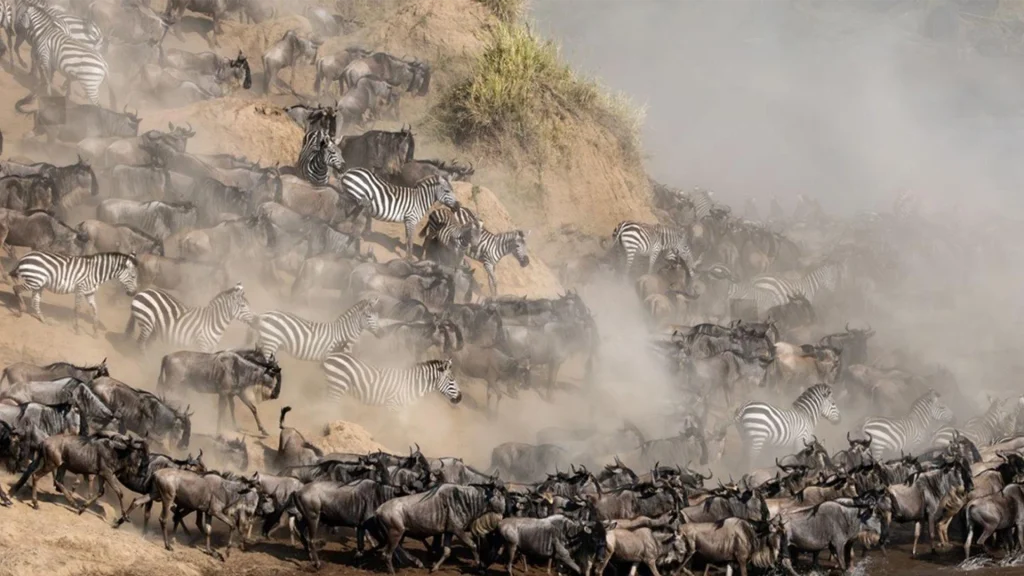
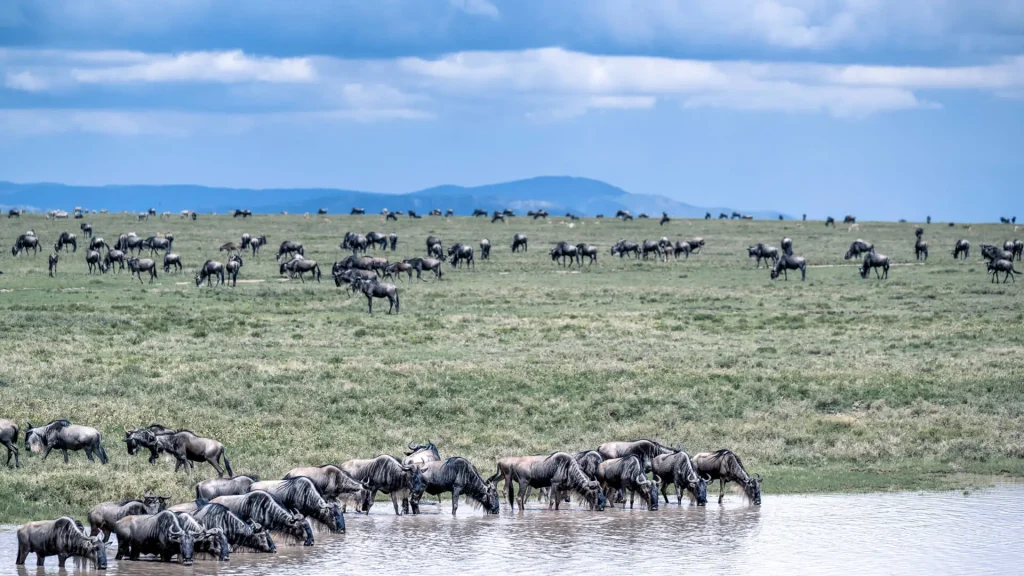
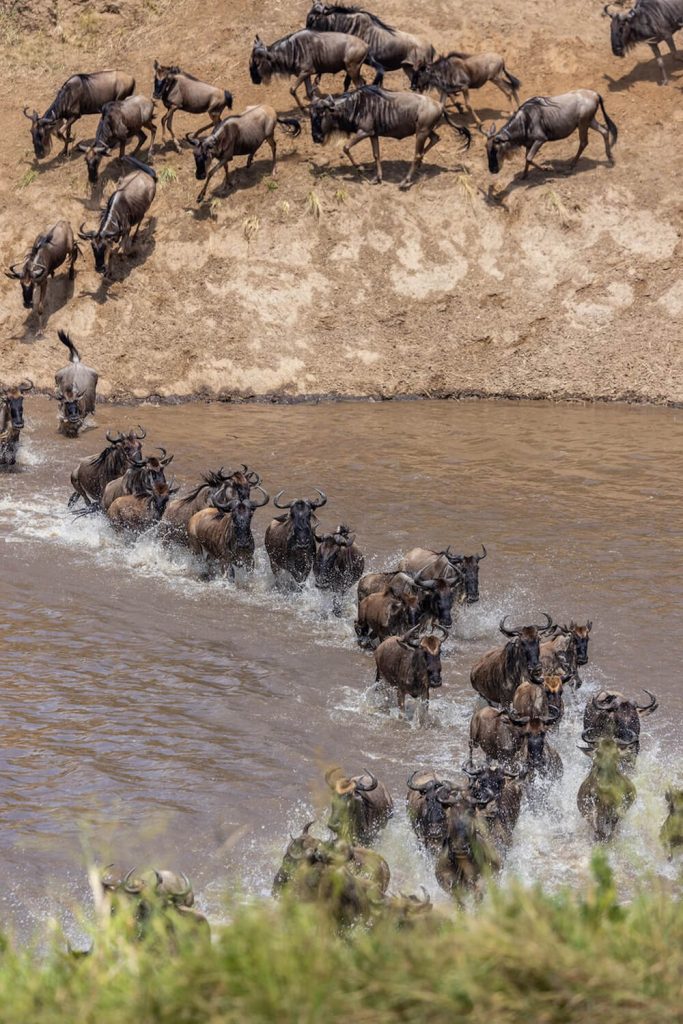
The Great Wildebeest Migration is the defining wildlife event of the Serengeti ecosystem and one of the most extensively studied animal movements on Earth. Each year, more than 1.5 million wildebeest move through the Serengeti and into Kenya’s Maasai Mara ecosystem in search of fresh grazing and water.
Accompanying them are roughly 250,000 zebras and hundreds of thousands of Thomson’s gazelles and other antelope species.
Large herds gather on the short grass plains of southern Serengeti, where most calves are born during a brief calving season. As grazing conditions change, the herds gradually move westward and northward through central and western Serengeti before reaching the Mara River.
The river crossings, often taking place between July and October, are among the most dramatic moments of the migration as animals face strong currents and predators waiting along the banks.
The southern plains stretch from the Ndutu region to the open grasslands that dominate this part of the ecosystem.
Fertile volcanic soils support nutrient rich grasses that attract vast numbers of grazing animals. This area serves as the principal calving ground for wildebeest and zebras during the early months of the year.
Often referred to as Seronera, central Serengeti is characterized by open plains, river valleys, scattered acacia woodlands, and numerous granite kopjes. Permanent water sources allow wildlife to remain in the area throughout the year. This region is particularly well known for resident lion prides, leopards, cheetahs, and a high concentration of herbivores.
The Western Corridor follows the Grumeti River toward Lake Victoria. The landscape includes riverine forests, floodplains, and wooded savannah.
During the migration season, large herds pass through this area and encounter Nile crocodiles inhabiting the Grumeti River. The region also supports elephants, buffaloes, giraffes, and several antelope species.
The northern section borders Kenya’s Maasai Mara and contains rolling hills, woodlands, and the Mara River. This region receives fewer visitors than the central plains and provides important dry season habitat for wildlife. The Mara River crossings attract significant attention as thousands of wildebeest and zebras attempt to cross while avoiding crocodiles and other dangers.
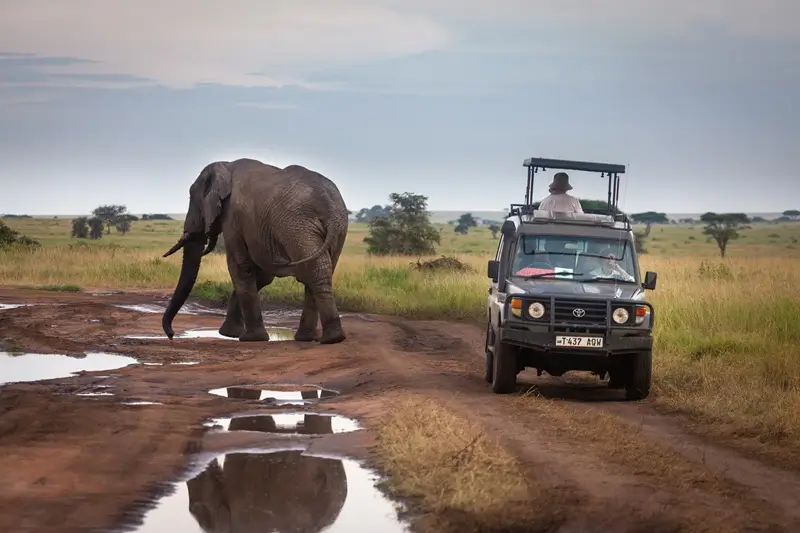
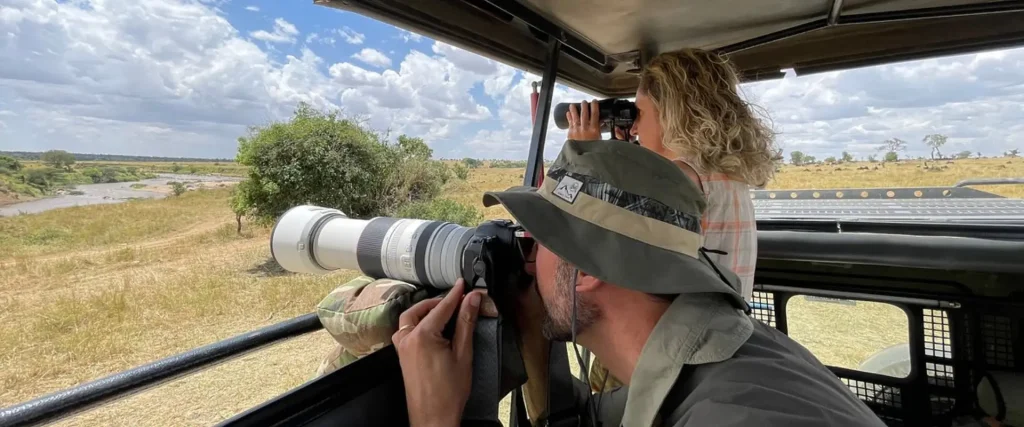
Game drives remain the primary activity in Serengeti National Park. The extensive network of tracks allows visitors to explore different habitats and observe a wide variety of wildlife, including the Big Five and numerous predator species.
The migration can be viewed in different regions of the park depending on the season. Calving herds, river crossings, and large grazing concentrations offer distinct wildlife experiences throughout the year.
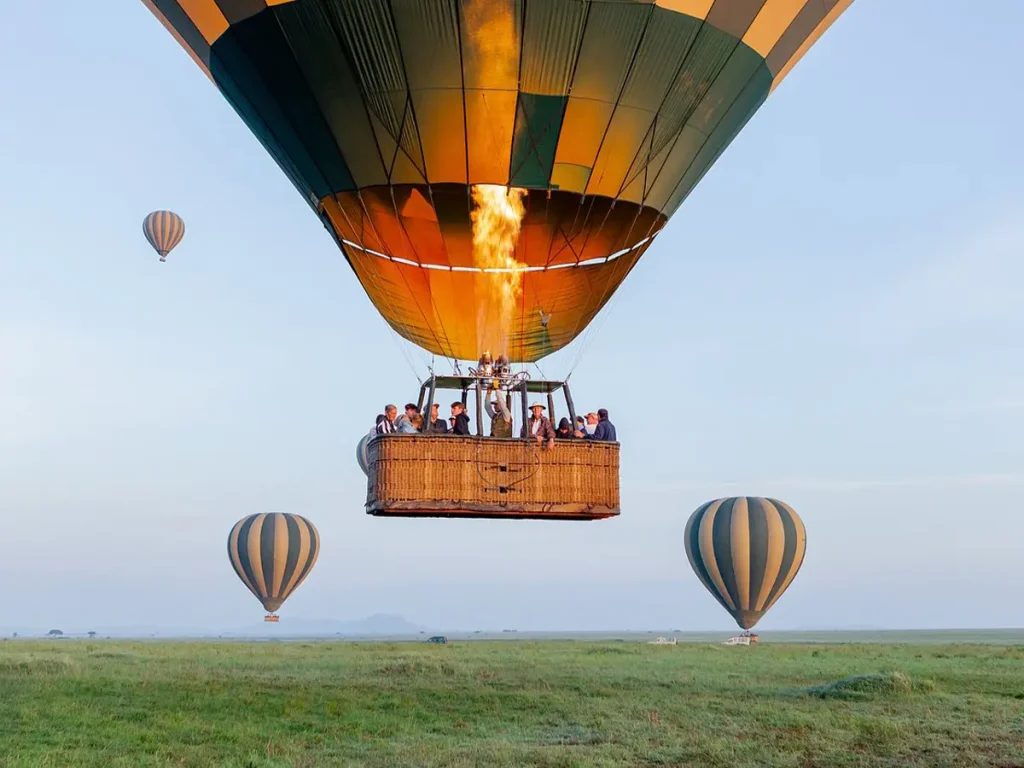
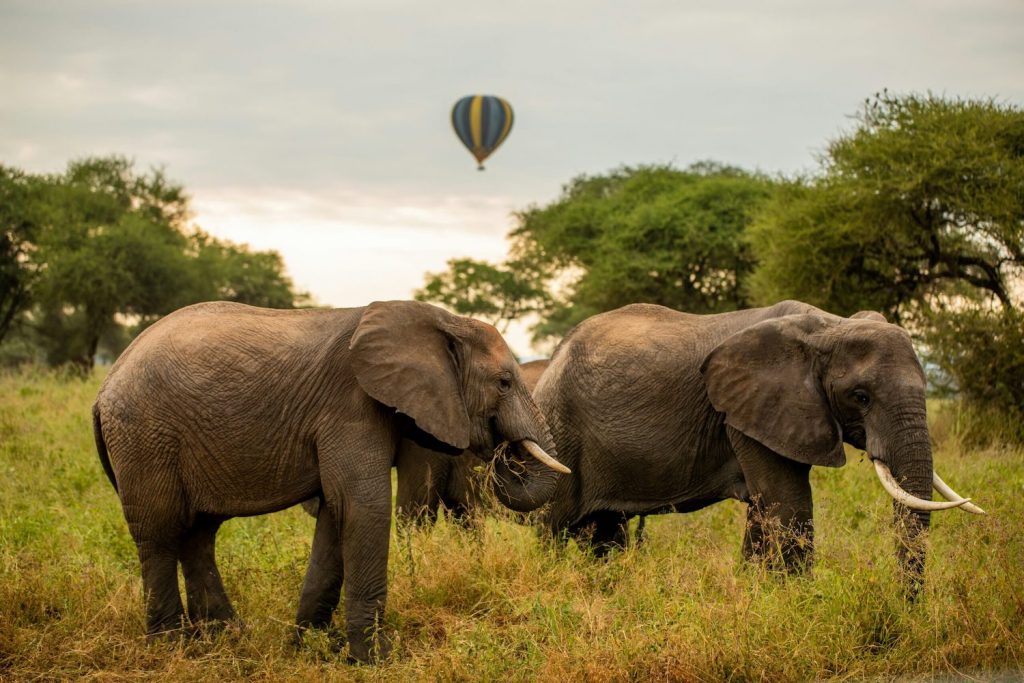
Balloon flights provide an aerial perspective of the plains, river systems, woodlands, and wildlife below. Flights usually take place shortly after sunrise when conditions are most favorable.
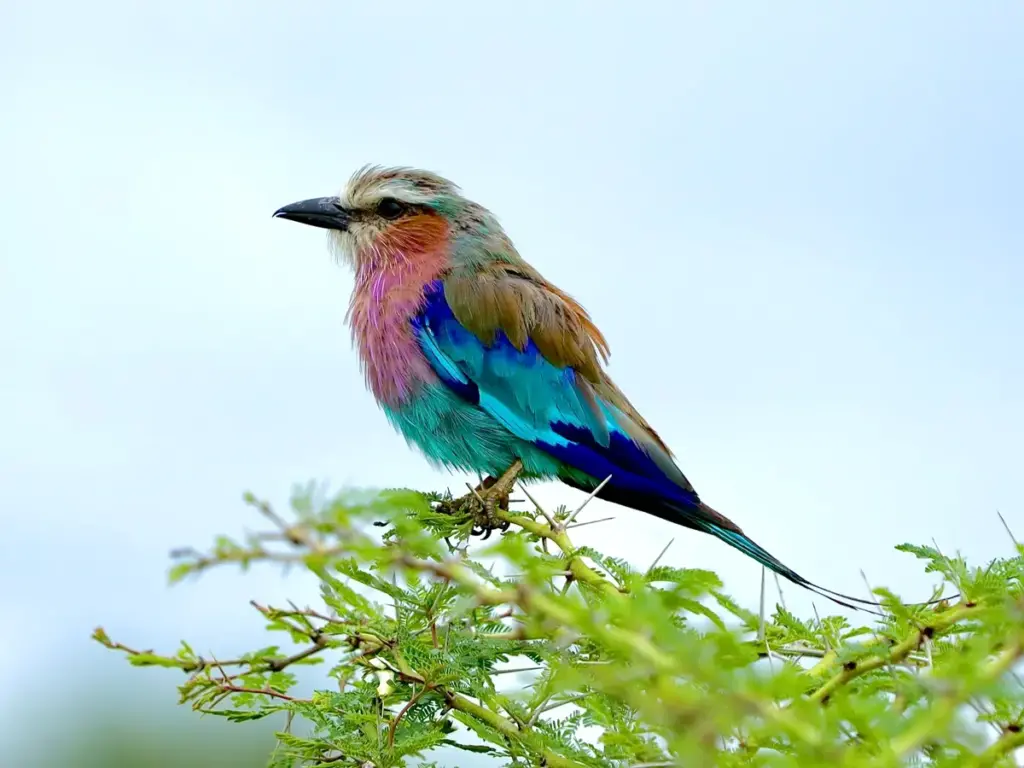
With more than 500 recorded bird species, Serengeti attracts both casual bird enthusiasts and experienced ornithologists. Common sightings include secretary birds, ostriches, kori bustards, vultures, eagles, and numerous migratory species.
The diversity of habitats, seasonal wildlife movements, dramatic landscapes, and abundant predator activity make Serengeti one of Africa’s leading destinations for wildlife photography.
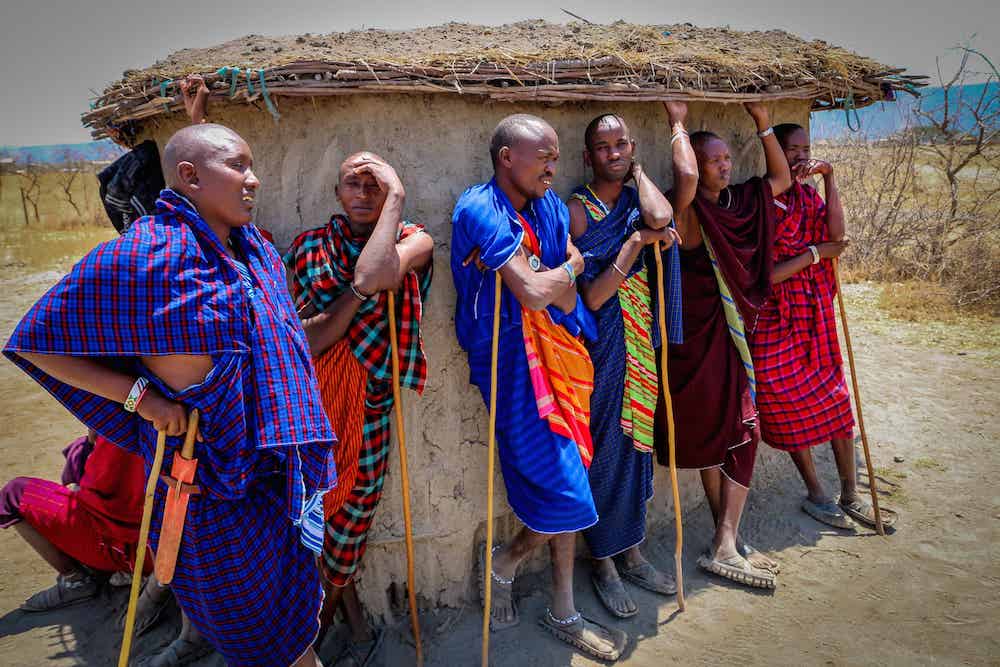
Selected programs include visits to Maasai communities located near the boundaries of the ecosystem. These visits provide an opportunity to learn about local traditions, pastoral livelihoods, and the longstanding relationship between people and wildlife in northern Tanzania.
Covering approximately 14,763 sq km, Serengeti National Park ranks among Africa’s most significant protected wildlife areas.
Tarangire National Park spans at approximately 2,850 sq km, making it one of Tanzania’s largest protected wildlife areas.
The Ngorongoro Conservation Area is one of Tanzania’s most remarkable safari destinations, covering approximately 8,292 sq km in the northern part of the country